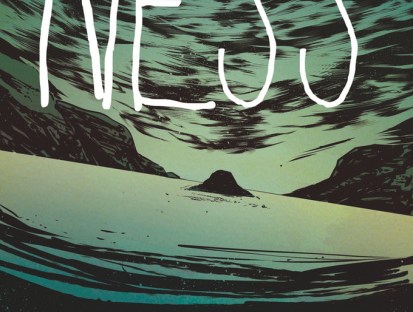
Ness Cover
Reviews

Review: Ness #1

A few weeks ago (okay, more than a few weeks) Rob Carey put out a call for people to review Ness #1. Having been mostly absent from the Blogosphere since he sent me the digital copy of the comic, it has taken a considerable amount of time to produce a review – which, as with all of my reviews, functions best as a shopping guide for those with an interest in Irish comics.

Not the Nessie You Think You Know

As I set out to write this review, I asked my brother what was the first thing that came to mind when I saw ‘Ness’. His response: Nessie. As in, the dinosaur-monster from Loch Ness. And that’s the premise of Ness: there’s a monster in the lake. The difference is, this one is made of nightmares and tentacles, and any sightings you might have it are likely to be short-lived – like you. Drawing upon Lovecraftian horror to back up this Made of Nasty beastie with some Made-to-Feel-Genuine folklore, writer Chris Welsh gives us a fresh take on the myth of Loch Ness.

With a cast of four protagonists to guide us through the first issue, a believable excuse for their being there when they are, and an intriguing storyline filled with suspense from its dark beginnings, Welsh is definitely onto a winner with Ness.

Supported by deeply engaging art from Rob Carey, which perfectly captures an imagined Scotland and the nightmare that is their Nessie, and alluring colours from Dee Cunniffee, Ness is a comic worth checking out for fans of Fantasy, Horror or Adventure stories, but not for the feint-hearted. It’s gruesome and gory, and all things wonderful this time of the year.

Even better is that the second issue is on its way already! Following a successful Kickstarter campaign – and I’m not surprised in the slightest, given the first issue that Carey graced with me – we’ll be seeing the new issue pretty soon, with expected delivery dates for print copies in December this year. (It’s a horrifying Christmas present to mysellf, and I can’t wait!)

Celtic Clan Cover
Reviews

Review: The Celtic Clan 1-3

Nigel Flood from Punt Press sent me The Celtic Clan 1-3 to review. Looking at this from a Road So Far point of view, I’ve combined the review of the series to this point into one post, taking a look at series overall, rather than on an issue-by-issue basis. As always, I aim for the most positive aspects of a book as much as possible in my reviews.

Another Irish Superhero Story?

For such a small country, our comic creators love to create large teams of Irish superheroes. Buttonpress have one. Cremona Press have one. And, though they also release other titles, Punt Press have one. There’s always a problem with scale when it comes to superhero stories – just how many characters should you attempt to fit into one story? – and I think for the most part, Flood and co. have the max figured out. The Celtic Clan featured in the book, if you ignore the additional ensemble of supporting heroes, is enough to make the difference on the panels, and allows for a few different stories to be told at once.

I should say, I preferred Flood’s other work – The Globalists – but there’s a lot of fun to be had in the pages of The Celtic Clan. It’s definitely a more jovial comic, not quite on the all-ages spectrum of Buttonpress comics, but with a lot of the humour that a more violent comic needs when the cast are wearing spandex.

Villainsssssss

When I initially read the comics, I thought the idea for the villains was a bit…silly? I’ll settle on silly. I even thought that when I was tired and made my notes for this very review. Several days later, and taking into account everything I’ve already said, I revise that statement.

The villains of the comics are snake people. Yes, snake people. Lizard people, maybe. But definitely reptilian in nature, with a fun throwback to one of the strangest conspiracy theories we still occasionally hear about – the underground lizard people who rule the world!

Flood takes advantage of this to cast an eye back into Irish history, and manages to create a greater sense of mythos within his comics than three issues should really allow. (Bravo on that!)

The books are fast-paced, and artist Frank J Right succeeds in driving the story along expertly, and fleshing out the details on a wholly bizarre set of characters, seemingly without issue.

(And, it should be said, the characters vary in so many different ways. There’s a cat-man, lizard-people, a pixie-esque-woman, a classic warrior, a barbarian-ish old man, a speedster in spandex, and a monster made from whatever the ground can provide, be it turf, concrete or street poles. Despite the massive mix, he manages not to deviate from his style, and depicts everything skilfully.)

All in all, The Celtic Clan is a fun series. It’s worth checking out if you like superhero comics and want to support small press. How long we’ll have to wait for issue 4, however, remains to be seen.

Malevolence Cover
Reviews

Review: Malevolence

Launched at Dublin Comic Con, and then again in a library in Clonmel (because libraries are cool, and that’s where the artist lives), Malevolence is a new horror comic from writer Hugo Boylan and artist John Quigley, with Dearbhla Kelly on Colours and Kerrie Smith on Letters. John asked me, before I met him at DCC and talked the ear off him (and attempted in vain not to be sold almost everything from his table), if I would review Malevolence. As usual, don’t take the review too critically – I know I won’t while writing it!

Twisted

One word sums up the book. Twisted. From Boylan’s writing, to Quigley art, Kelly’s colours, and even Smith’s lettering. The individual elements of this comic twist together to make something uniquely engaging. I wouldn’t want to spoil the plot for you, but the basics you need to know about Malevolence are these simple facts:

1. The comic takes place across three decades.

2. The comic is filled with fleeting moments of madness.

3. The comic wouldn’t make much sense without Kelly and Smith’s contributions.

Colourful Dread

Most comics can get along with a strong story and a skilled artist. Black & White is an acceptable standard for storytelling. But colour brings this one to life. Colour is the only way we know when we are within the story. Colour invites us through three decades of horror. Without colour, an element so vital to this book, everything else would need to change. The book would need to be re-panelled, re-organised, maybe even re-written to a more linear story. But linear is common. Colour allows for Boylan and co. to create their non-linear nightmare.

Colour is the vital piece of dread that the books need to truly come alive.

When Smith’s lettering gets taken into account, the genre of the book is really played up expertly. There’s a lesson to be learned from letterers all-over about how to turn a writer’s words into part of the art itself within Malevolence.

The book builds upon a beautifully horrid concept and executes it in terrifying fashion.

You can get your hands on Malevolence – and you really should – from Hugo Boylan and John Quigley directly. Hugo can be found at @HugoBoylan; John can be found at @johnquigley209.


The Globalists
Reviews

Review: The Globalists #1

Nigel Flood of Punt Press got in touch with me lately to see about reviews of a few of his books – and he was quick to send on issue #1 of The Globalists, and issues 1-3 of Celtic Clan in the mail. So, full-disclosure for this review, they were free review copies. Reminder, also, that when it comes to comics, I’m not overly critical; I love to explore the reasons I think people will enjoy a particular comic (which helps in recommending the books people would enjoy!) With that said, onto the review.

Not Your Average Superhero Comic

The first thing that will be apparent from the cover of the book: it’s a superhero book. It looks every bit the genre; Kevin Keane certainly knows how to draw for the market. The characters – and we’ll get onto them in a minute – are fully brought to life in a way that’s typically expected of the Big Two. Before readers get into Nigel Flood’s tale, there’s an instant feeling of familiarity that helps ease newbies to the writer’s work into the book.

And what a book.

Intriguing from the very start, The Globalists presents us with an unknown narrator in a prison cell, a glimpse at the snarling face of one Adolf Hitler, and a concise expository history lesson on the Superhuman Arms Race. From there, it’s all downhill. And uphill. It depends on your perspective.

As a first issue, the book manages to fit in a lot. We’re given a measure of the powers at play (pun 100% intended), the backstory to the issues at hand in the modern day, a glimpse at the protagonists, and a sense of the scale of danger presented by the antagonists. I’m a sucker for superhero stories. I devour them greedily. And I need more of this from Flood and co.

While some stories start a little unsure of themselves, Flood gives us an established dilemma and philosophy, to be explored in greater detail as the series continues. All we need now is a release date for the next issue. In the meantime, you can get a copy of the series debut from Punt Press directly, or in Forbidden Planet Dublin, while stocks last. Recommended for fans of superhero comics looking for a fresh take on the genre.

Dublin Comic Con
Article

Dublin Comic Con 2016

Dublin Comic Con opened its doors on a sunny Saturday morning to the general public; those of us near the front of the line had some refuge from the blistering morning sun – we’re still suspicious of that, given the history of Irish weather – and waited a good two hours to get in.

And it was worth it.

DCC was filled to the brim, with attendees in plain dress and costume, vendors with all manner of geeky wares, and artists – writers and illustrators both – manning the tables in the Artists Alley.

Photos were posed for, money exchanged hands, people were heard screaming with delight – and occasionally telling a Jon Snow cosplayer that he knew nothing, or informing a Wally that he had been found – at the various items around the room, and marvelling at the cosplay outfits.

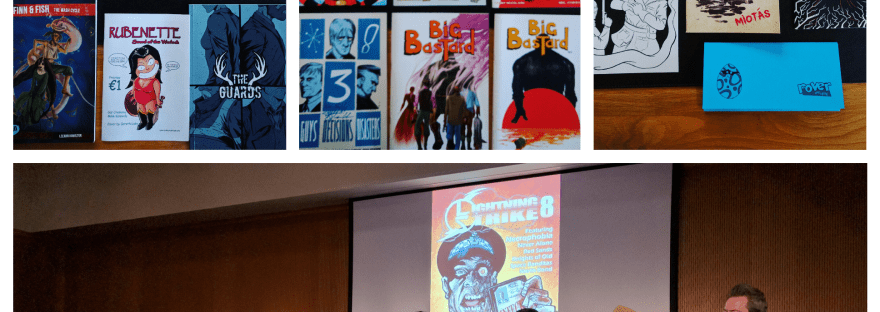
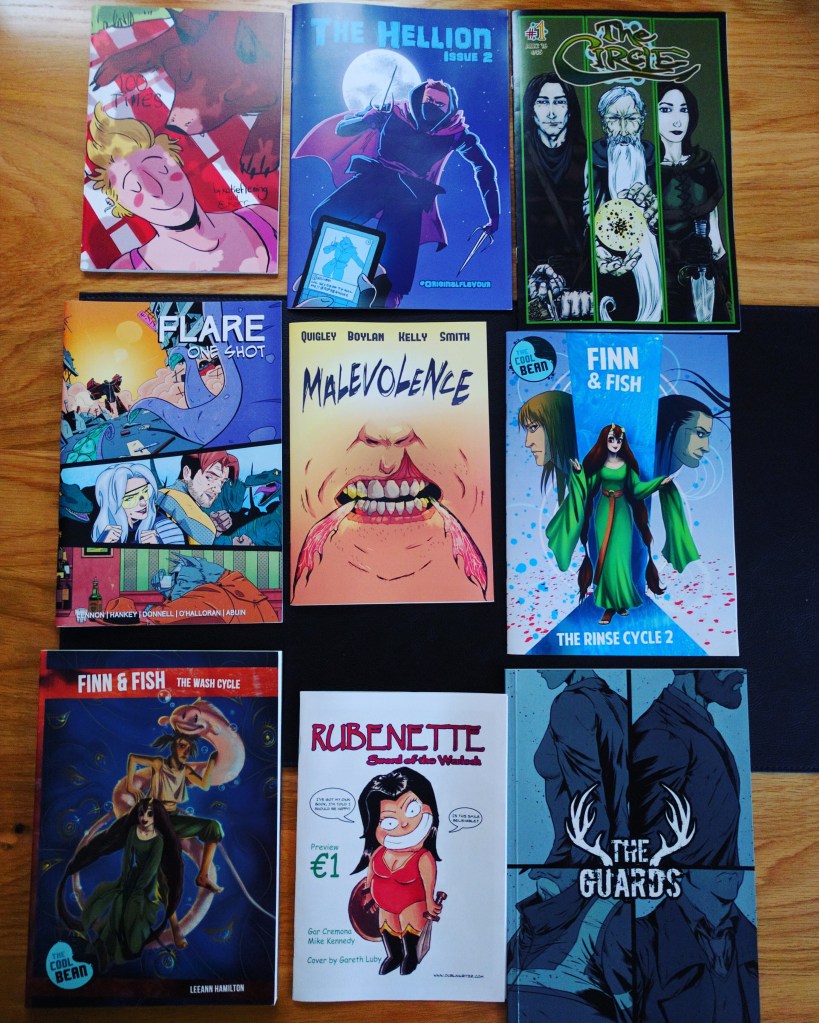
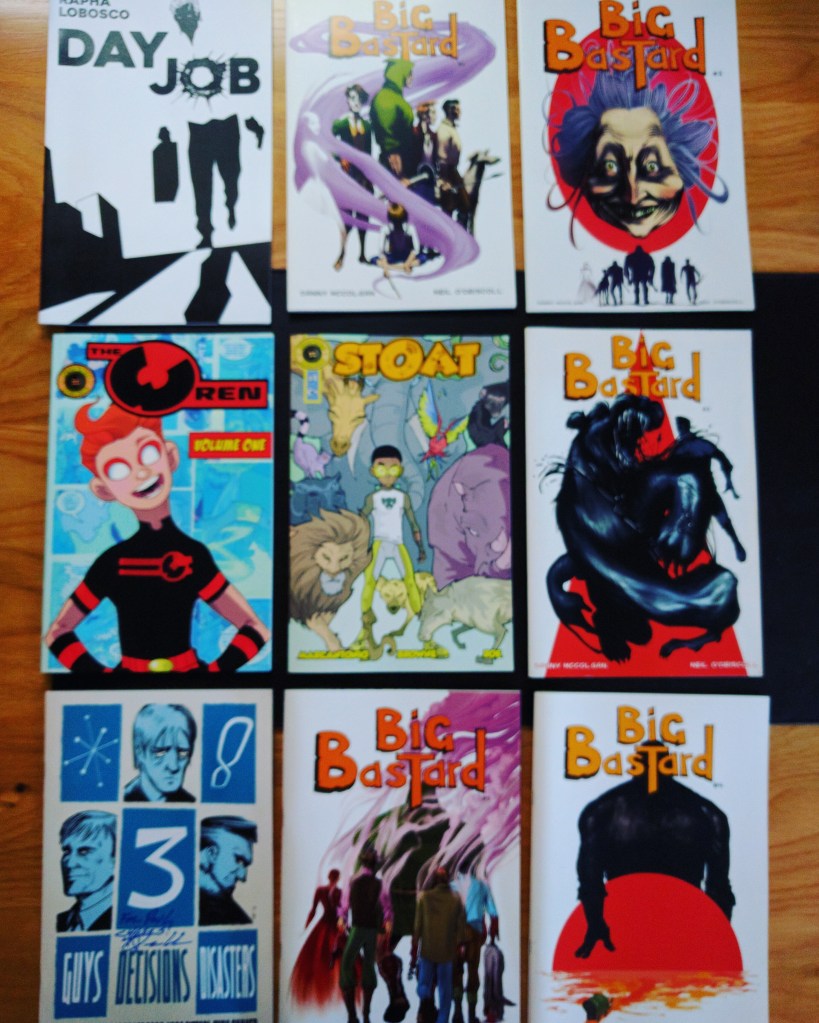
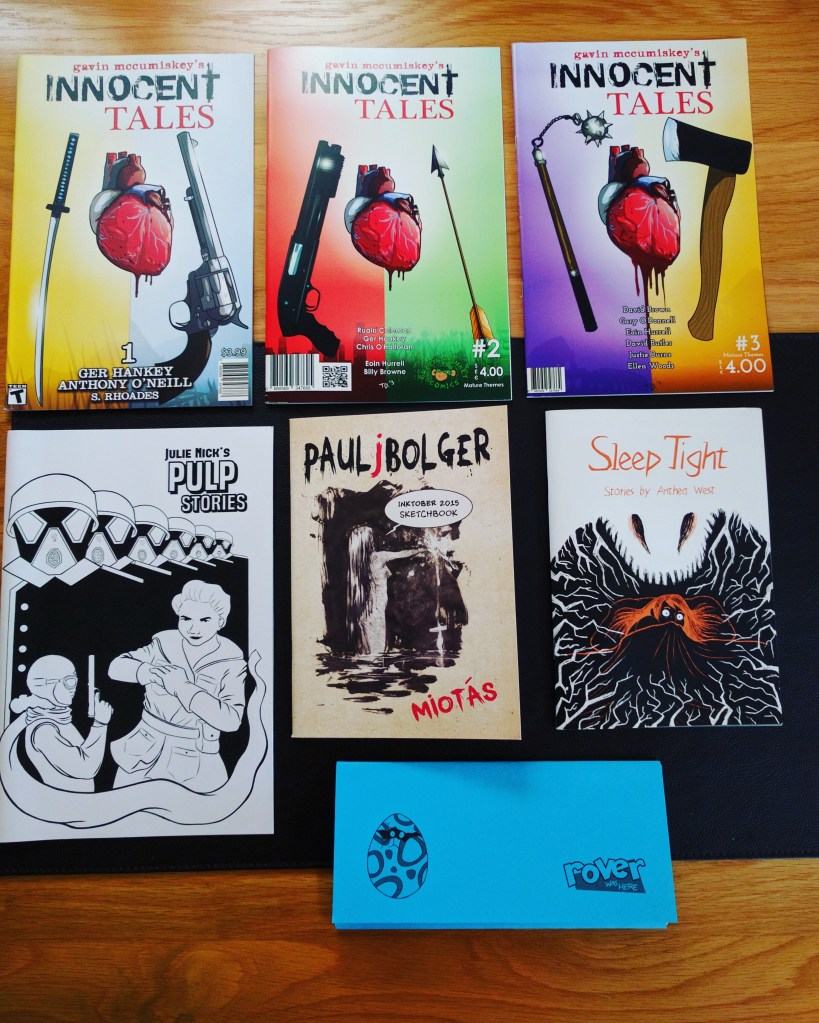
And me? I was making my rounds. Several times a day. I eyed up the tables, I ignored my shopping list altogether, and I earned the title I would later be given: the Patron Saint of Small Press. Below are my comic purchases from Day 1.

100 Times, Helion #2, The Circle, Flare One-Shot, Malevolence, Finn & Fish The Rinse Cycle #2, Finn & Fish The Wash Cycle, Rubenette Preview, The Guards
Day Job, Big Bastard #1-5, Wren Vol.1 (colour edition), Stoat #1, "3"
Day Job, Big Bastard #1-5, Wren Vol.1 (colour edition), Stoat #1, “3”
Hound 2, Con Jobs, Something in the Tae, Schlock, An Bruid on the Moors Part One, Oh No Comics!, The Warrior Maidens, Sakura #1
Innocent Tales #1-3, Pulp Stories, Paul J Bolger Inktober Sketchbook, Sleep Tight, Rover Was Here
A Clockwork Universe, Phantom 80th Anniversary, Speakeasy, The Fantastical Sombrero, None Shall Pass (Preview), Double Dead

On Sunday, I  also managed to pick up Girls Like You and issues 1-3 of High Fantasy from Hugo Boylan. He was quite convincing. (But not enough to make me get even more books, because I figured 43 comics was a decent cut-out point.) Over the weekend, my stock of prints also got bigger, with a couple of Seán Hogan (Rabbit and Paul), as well as a healthy dose of nerdy merchandise (including a Spider-Man slate coaster, a wooden box with the Flash emblem on it, and a Bulbasaur plushie, because starter Pokémon are important.

Sunday also provided an opportunity to learn more about the Small Press process, from a panel of experts.

Small Press Panel. L-R: Seamus Kavanagh, Eoin McAuley, Leann Hamilton, Kinga Korska, Keith Keane, Hugo Boylan, Paul Bolger, Charan Marcantonio
Small Press Panel. L-R: Seamus Kavanagh, Eoin McAuley, Leeann Hamilton, Kinga Korska, Keith Keane, Hugo Boylan, Paul Bolger, Charan Marcantonio

The lessons learned were invaluable; from a writer’s perspective, the most important tip was to respect the artist, and do all of the other work for the comic so that they don’t have to.

Comics are such collaborative works – evident by the title pages of many of the con’s debuts – and the community in Ireland so close-knit, that this vital lesson is one worth remembering and repeating frequently. The atmosphere at DCC was all about the community that has formed around these little (and sometimes not so little) books, and encouragement is never far away.

Everyone who participated in the weekend’s affairs are likely experiencing the same double-edged side-effects of a major convention: excitement for comics, and exhaustion from a weekend of talking about them. Needless to say, there’ll be even more amazing work at next year’s event, and from more creators. A guided tour of the Artists Alley (from me – Paul Carroll) for a friend, Tracy Sayers, showed just how welcoming the community can be, and I know that we’ll each be exciting to join their ranks in the near future.

Reviews

Review: Thimble #1

In 2015, Buttonpress Publications released their third title, to publish alongside Wren and Artos. The new book, written by letterer Phil Roe’s wife, was Thimble.

Where Wren is a superhero book, Thimble is a fantasy. She’s still a hero, and looks very much the part in the first issue cover, but her story focuses much less on the Irish heroes in Dubh Linn. Instead, it focuses on local folklore, and a small protagonist’s big dreams. Cursed to be minuscule, Thimble is a charming girl who wants to explore the world around her, with the aid of some magic keeping at her to regular proportions for the sake of a normal life.

This is a remarkable debut from a new writer at Buttonpress, Sarah Roe, which really shows off the potential of the books that the company can produce. Charming, with incredibly inviting, Roe’s story will draw readers in and leave them wanting more.

The book’s artist, Jason Browne, has shown in this latest title his ability to capture the life of a modern day rural Ireland. Thimble shows us how far his artwork has come since the first Wren comic. Colour is the man’s best friend, giving his style more life and vibrancy.

Thimble is a powerful, story-driven tale, so enjoyable and enthralling that readers young and old (hey, it is an all-ages comic) will have no difficulty with the book, except that it has to eventually end.

You can catch Thimble #1, as well as WrenArtos, and Buttonpress Publications’ newest book, Stoat, at Dublin Comic Con this weekend. In the meantime, Thimble fans will need to wait for Browne and co. to finish with the next issue. At least they’ve got plenty more to keep us interested.

Rabbit and Paul Cover
Reviews

Review: Rabbit and Paul

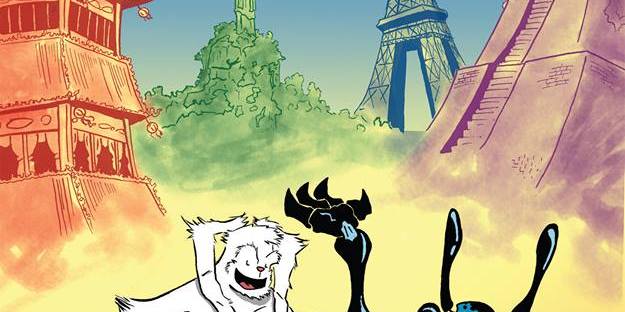
Over the past few years, there’s been an explosion of Irish comics. Last year, the most Irish comic ever was published by Offaly-native Seán Hogan: Rabbit and Paul.

Set in the small town of Bally’O’Jhaysus (+2 Irish-ism Points), the book follows the tale of Paul and his anthropomorphic rabbit-friend, Rabbit. Rabbit is acquired in a Tat Shop (+1 Point), despite warnings from Paul’s parents about not bringing any more tat into the house. (+1 Point) Through a bizarre series of events involving a strange, illegal candy (+1 Point for vague drug dealer reference), a fascination with a particularly large Chinese restaurant (+1 Point), and a range of hilarious Irish phrases (1+ per use… I think you get the idea: extremely Irish book), the journey of the titular duo is mapped out in bizarre fashion.

This is a unique celebration of the peculiarity of Irishness, capturing Irish humour in its purest (and most PC) form in its smallest details. Anybody with a notion of experience with Ireland will immediately understand the references made throughout the book, though it should be said that the Irish audience will benefit most from the tiniest jokes hidden in the pages.

Rabbit and Paul is a charming, witty book, enough to keep readers laughing long after the last page. Barely after finishing it did I feel an obligation to get my hands on a second copy as a gift for a friend. Anyone who can get past the anthropomorphic line in the blurb is sure to love the story, told with a great capacity for what it means to be Irish.

Hogan has produced an impressive debut, both in its writing and its illustrations. The comic will leave readers wanting more. For the moment, a conversation with the book’s creator will have to suffice. You can catch him, and Rabbit and Paul, at Dublin Comic Con.

The Earthbound God Cover
Reviews

Review: The Earthbound God

In 2013, Anthea West released The Earthbound God. Six years earlier, I became acquainted with her online. I’ve been a supporter of her work since she started producing comics; I need to state this before I get into the review, to be clear that I adore her work, and consider her a vital friend in the comic book world.

When I picked up The Earthbound God, during its initial release, I didn’t know what to expect. All I knew was that shortly thereafter, the book sold out, and Anthea West needed to print more to meet demand. I can only imagine what might have drawn people to this book – pun definitely intended. It must have been – and I really can only guess – the beautiful concept of the book, one that inspired me to support her IndieGoGo campaign for the first print run. I was not disappointed with the book, and I know that I am not alone.

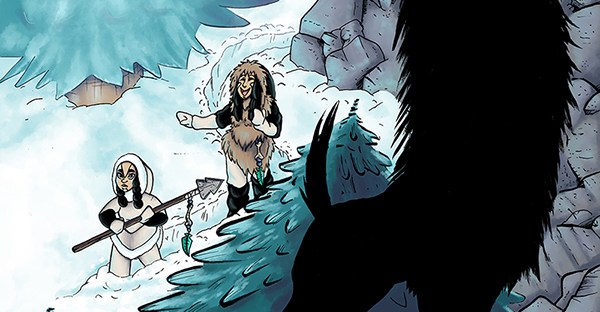
West tells a wonderful story of wayward sisters in a frozen world, sisters by bond rather than blood, travelling from two very different places in the mountains. During the winter, they must find and kill the Earthbound God, Mij, a bounty kill that would secure their future. Through their journey, West paints a clear picture of a strange world, where language is a constant barrier and a superstitious force, and something to be played with in the writing. In few words, West shows readers the importance of story in a world without electronic communication, where instances to find food and warmth can be few and far between.

Of vital importance in this tale is the relationship between the sisters by bond, Yaeya and Eusha, dressed in thick furs, with remarkably expressive faces. Their relationship is complicated, but understand easily in the ways they interact throughout the book.

This is a fully fleshed out book, drawn in black and white in such a way that the frozen-over world can be felt through the pages. The creative use of panelling, and the value placed upon blank space, draws a complicated picture.

With clear influences from Princess Mononoke, and a long history of her own creative drive in character and monster creation, West delivers a powerful book, with a disturbing antagonist and a harsh environment to offset the embodied enthusiasm within our heroes.

The book is available through Forbidden Planet Dublin; if you ask nicely, and if she has copies available, Anthea might be able to bring copies to Dublin Comic Con. (Update: Anthea will definitely be bringing copies of the book to DCC.)

Brain Fetish Cover
Reviews

Review: Brain Fetish

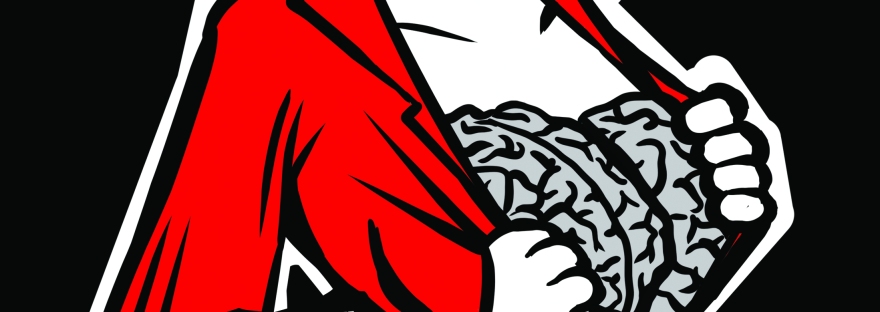
I picked up Brain Fetish by Kinga Korska under the proviso that it had something to do with brains, boobs, or both, a classic case of judging a book by its cover. In a way, I wasn’t wrong.

Kinga Korska, a Polish writer and artist living in Dublin, has given us a remarkably candid book on relationships, philosophy, and psychology. Even without addressing the story, we already have a quick-read textbook on how to have better relationships in your life, through careful examination of how we communicate, and why people say certain things. It’s an incredibly wise book, proving Korska’s wealth of wisdom well beyond her years. But it’s more than a textbook. This is a novel, filled with love and humour and the incredible intricacies of human relationships.

I first met Kinga at the inaugural Geek Mart in Dublin, shortly after I got my hands on her book. She arrived with a table’s worth of books and magnets, dressed in full cosplay despite the heat. Memory recalls that she was a steampunk Alice Madness. She was witty and charming, and she sold her book well to prospective customers through sheet force of character. Understanding Kinga is a good way to understand her book; both come equipped with refreshing honesty and a wicked sense of humour.

Even in dealing with such a complicated theme – people are the most complicated thing that most of us will encounter in our lives, pending alien invasion or supernatural apocalypse – and through a complex style, with a detailed, continuous narrative, Korska makes the subject matter easy to understand. In a manner of contradictions, Korska paints this difficult story and teaches a powerful message all through the use of black-and-white artwork; rarely grey-scale, simplistic (albeit consistent) in style, and whole capable of illustrating a point. Few artists can embrace simplicity the way Korska does while simultaneously addressing an incredibly deep narrative.

This is a raw book, and may leave some readers feeling uncomfortable with how they once thought about others, but it represents an important aspect of comics and their power to shape the world and those of us lucky enough to share it at this moment in time.