
Launching at Dublin Comic Con, The Broker is the first book from podcaster Wayne Talbot. The book has an interesting publication history (and it’s not even out yet!), originally intended to be released across three anthologies by Lightning Strike, and changing creative teams when it stood out by itself. The original creative team consisted on Wayne Talbot as writer and Miriam Abuin on lettering, both of whom remained throughout the entire project. For the book’s first act, pages 1-10, Ruairi Coleman served as artist, with Timothy Brown on colours. For the remainder of the book, Brian Corcoran assumed the role of artist, with Talbot picking up colours. Ciaran Marcantonio resides over the book as editor as it reaches convention tables for the first time.
The plot of the book seems less tedious after putting the book’s history into words; conceptually, it’s simple, and thematically appropriate for the current political climate. Talbot deals with corruption, brutality and conspiracy throughout three acts, pacing the tale incredibly well across each part. The protagonists are believable in almost every aspect – we’ll let the team away with the superb reflexes of their heroes due in part to the fact that comics allow a certain distinction from reality. Nothing is held back between the twists and turns of a plot centring around Brokers with their own visions of how the world should run, and wicked and scrupulous means of achieving their goals, playing with lives as chess pieces.
Readers can be understandably concerned when they hear about the change in artist between two parts of the story, but fear not: Coleman and Corcoran’s styles compliment each other well. Where Coleman dealt with some of the more explosive scenes of the book, relying on dynamic movements between panels, Corcoran deals with the forensics in greater capacity, picking apart the plot with a fine pen. It helps that each artist deals with a different primary protagonist, with Corcoran and Talbot creating a new tonal quality to the book as it enters its second act. Talbot and Brown’s colours blend well together, and while I would personally question one particularly vibrant background colour choice, Talbot succeeded in completing the colouring of the book as well as any seasoned creator could hope.
Between them, Talbot and Brown created a theme of colours to track throughout the book, working with Abuin’s lettering to tie the whole piece together neatly. Reds carry violence, purples hint at the presence of the antagonists, and oranges case a light on Catelyn’s past.
The risks involved in changing teams are many, but a book like The Broker was perfectly designed to make use of it in the best way. I would question it if the division in acts wasn’t apparent in the writing, too, and any reader should worry when they see such a drastic change in a book’s lineup; thankfully, The Broker blends its second team’s styles with its original creators.
A couple of side notes before I finish: I love that there’s a soundtrack to listen to while reading the book (interior back page, for those of you yet to read the book), and; Catelyn is perhaps my favourite single character from an Irish small press book. As well as being incredibly Bad Ass, she has a few choice panels that really stand out for me towards the end of the second act. When you’ve read the book, then you can ask about it if you don’t immediately spot what makes her so relatable.
I look forward to something new from Talbot, whichever creative team he works with. And, while this is no criticism of The Broker, I’m thankful that the next project he’s announced is less contemporary in nature, so that we might see more of how he creates, and less of the current politics that fills newsfeeds daily.
Follow the creators on Twitter:
Wayne Talbot: @waynetalbot
Miriam Abuin: @miriamabuin
Ruairi Coleman: @ruairicoleman
Timothy Brown: @artoftimbrown
Brian Corcoran: @_brian_corcoran
Ciaran Marcantonio: @ciaronious


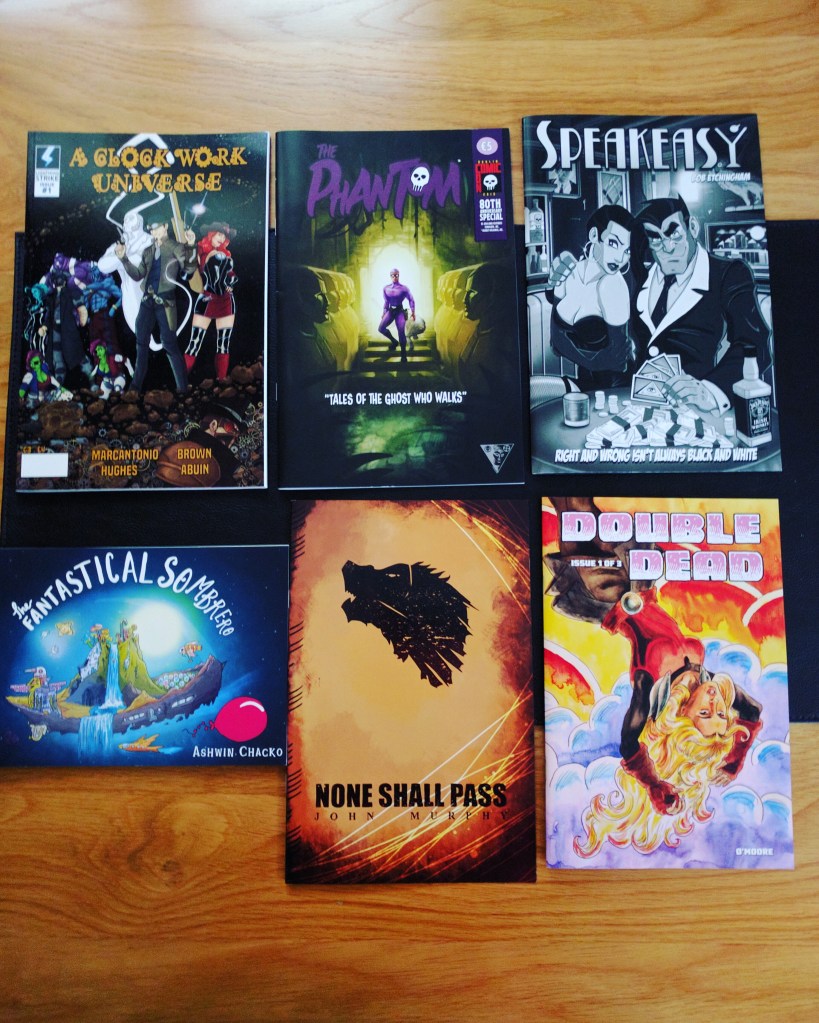
 Entering the Fumbally Stables, attendees were greeted by Matthew Melis and Debbie Jenkinson, two of the organisers for the day. Matthew put together the market side of things, while Debbie arranged the panels. She was also responsible for the massive selection of comics for sale on the way in, from her, Sarah Bowie, Matthew, Paddy Lynch, Philip Barrett and more.
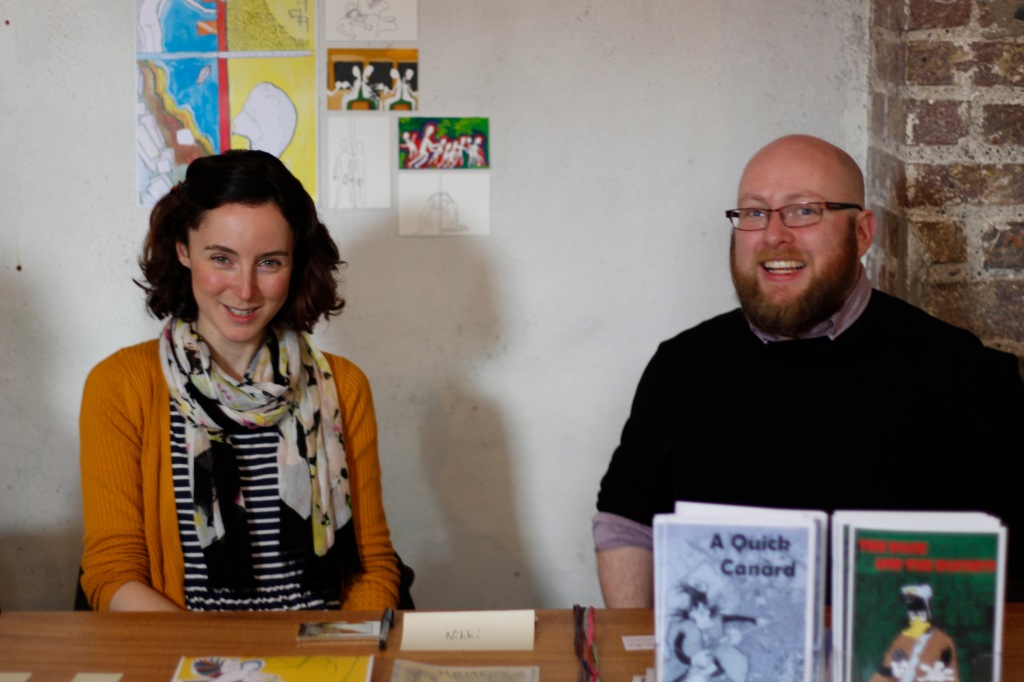 Nikki Foster and Hugh Madden were next in line. Nikki had a range of zines of varying sizes with her, which helped to showcase the variety of styles available in the Irish comics scene. Hugh had a range of strange tales featuring anthropomorphised animals – obviously I had to get my hands on them.
 Pushing the limits of awesome strangeness were All Things Thom and Miriam Rodriguez. Thom had possibly the widest range of things with her, from t-shirts to stickers, prints and zines – including The Thom Guide to: What To Say When You Don’t Know What to Say, which she says she’s used at parties. Miriam had a range of Spanish-language comics with her, including one that had she censored on a second printing – roughly translating as ‘things that are a pain in the ass’, and featuring said pained-ass on the cover.
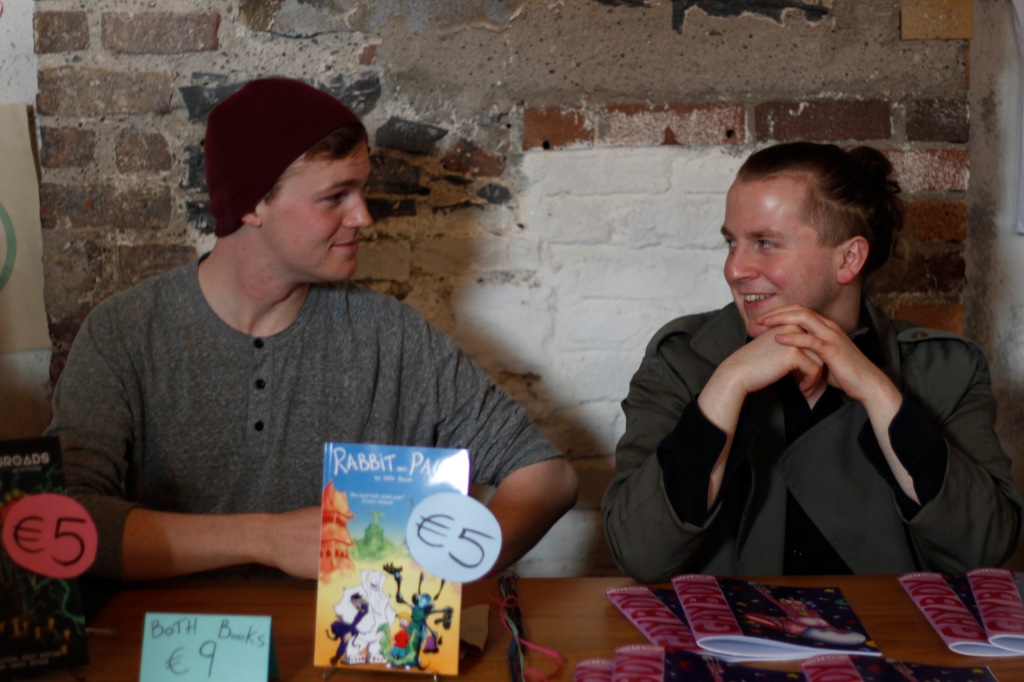 Seán Hogan and Dylan Drennan extended the diversity of Irish comics available on the day at the next table down. Seán brought Project Crossroads and Rabbit and Paul with him, respectively a sci-fi-fantasy-horror anthology and all-ages comics about a boy from Bally’O’Jhaysus who buys an anthropomorphised rabbit. (Try saying that with your mouth full!) Dylan, AKA Skabag, had Gayboy with him, a fun collection of artwork from someone who’s only just entering the scene with a book.










 Comix Ireland